

Beyond Contrafact part 2
Rhythm is the Master of Melody

Continuing from Part 1: we have a new 16-bar chord progression from reharmonizing the original chord changes.
Now that we have a new chord progression through our method of substitution, it’s time to compose the melody.
Here here are the new chords, voice-led for piano…
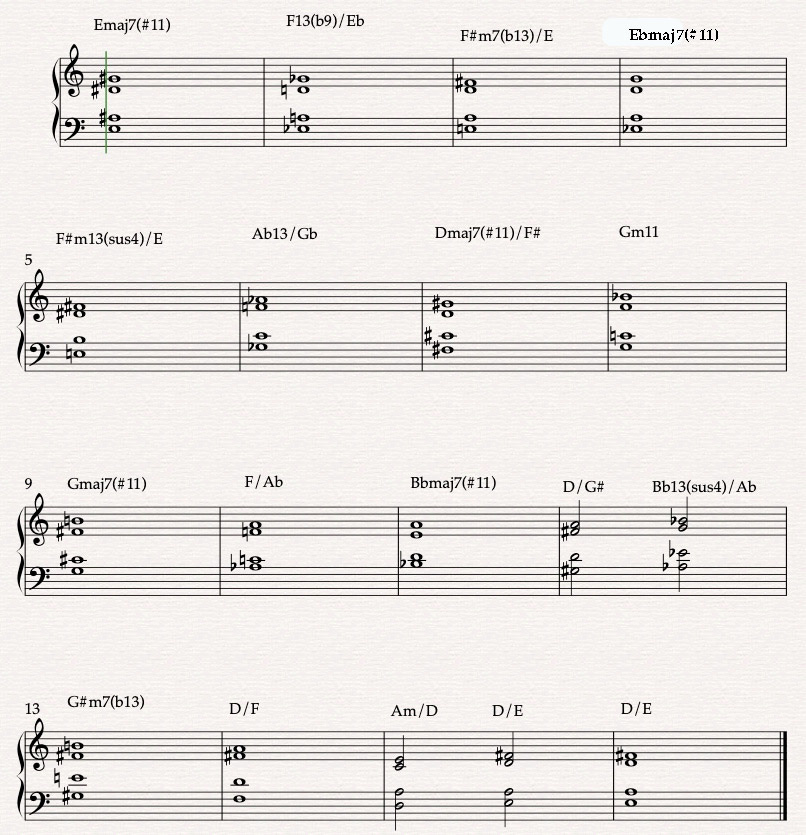
…and the same exact voicing for guitar:
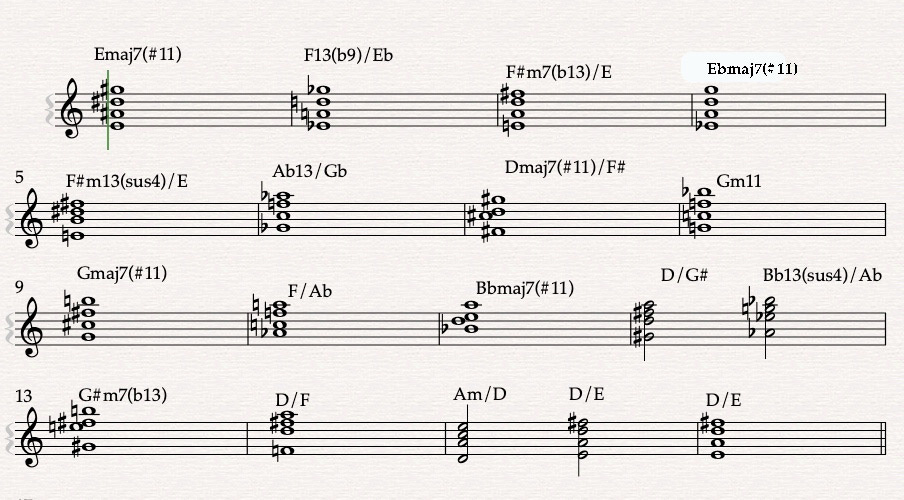
Perhaps the most natural way to compose a melody is to simply sing, mentally or out loud (or play) an improvised melody over the chord changes. This time we’ll have the melody come right out of the chords.
Now we can see what notes are in the highest voice. To keep it simple we used exclusively four note voicings.
Rhythm, however, is the master of melody, since rhythm can exist without melody but melody can't exist without rhythm.
So let's think rhythmically first and keep it simple. Since we are dealing with just 16 bars in a very compact AABA form,
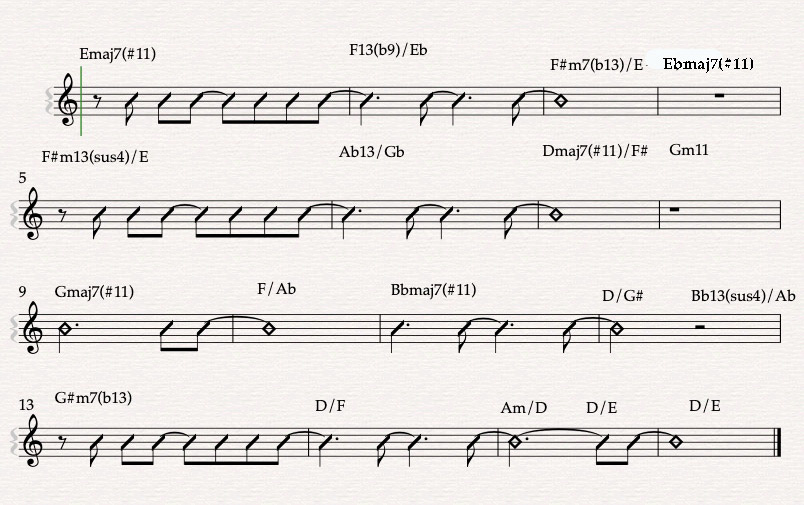
we sketch out a rhythmic plan that follows the form but is syncopated in a way that encourages swing.
A rhythmically repeating two bar phrase that emphasizes either or both the 2& and 4& on the first, second and fourth sets of 4 bars with something contrasting in the third set of 4 bars. the "B”section.
So here is a possible rhythmic framework upon which we will pace our melody notes:
Next we will determine our melody.
Continued next installment
I am planning on publishing all of my compositions here and much more content when, sometime in the future, I institute paid subscriptions. Material will still be available for free subscribers, similar in scope to what has already been coming out.
Copyright © 2023 Jack DeSalvo